RICE
Rice 101
Forget everything you know about making rice.
Keep your screen awake while you cook or follow a guide.
Forget everything you know about making rice. Really, just fuh-get about it. Many of us are familiar with cooked rice being sticky and clumped together similar to the type found in Asian cuisine. The American rice cooking method most commonly used also produces a wetter, sticker rice grain. We enjoy these types of rice with their perspective cuisines. However, Persian rice is different, each grain of cooked rice falls separately from the spatula onto the serving platter into an aromatic mound. To make Persian rice, basmati rice is the rice of choice, the longer grained the rice the better. Look for brands that say extra long grains on the bag if possible, although regular basmati rice works fine too. Other types of rice are not suitable for Persian cuisine.
Persian rice is served with kabobs and all Persian stews. For serving size we estimate one cup of dry, uncooked rice per person. One cup of uncooked rice equals approximately two cups of cooked rice. If we’re serving dinner to four people, we measure out four cups of rice. That said, we usually throw in one extra cup for good measure in case someone is extra hungry.
Basic Persian Rice Recipe
How to wash and prepare rice for parboiling
Measure the amount of basmati rice called for in the recipe into a large bowl. Pour water over the rice until the water is approximately two inches above the rice.
Use your hand to agitate the rice several times, then pour off most of the water while carefully cupping your hand on the rim of the bowl to retain the rice.
Cover the rice with water again and agitate again. Repeat this process three to five times until the water draining off the rice is mostly clear. This process removes most of the starch and will prevent the rice from being sticky.
Cover the rice with cold water and stir in one tablespoon of salt.
Soak overnight. Soaking overnight allows the rice to absorb water, softening it and giving you more control over the final product. If you forgot to soak the rice overnight or are pressed for time, you can soak the rice for a couple of hours before parboiling. You will need to cook the rice longer if you don’t soak it overnight.
The night before:
Measure rice before soaking. Wash three cups of rice, cover with cold water, add one tablespoon of salt and soak overnight.
How to parboil and steam rice
The process of parboiling helps to improve the rice’s texture by producing fluffy grains that are perfectly separated with no stickiness.
The next day
Add water and 1 tablespoon of salt to a large pot and bring to a rolling boil over high heat.
Drain and rinse soaked rice and add to boiling water. Stir once, then boil for 5 minutes.
The rice is ready when the rice grains begin rising to the top of the pot. The grains should be al dente, not too soft, but not crunchy, either. Do not overcook the rice or it will get mushy. Taste a couple of grains to ensure they are firm. You are going to steam the rice as well, so you should not expect it to be fully cooked. Remove from the heat, and pour rice in a colander. Rinse rice with cold water and set aside to drain.
How to steam Persian rice
Once the rice is parboiled, rinsed, and drained, it is ready for steaming. The first step is to prepare your rice pot. A large nonstick rice pot is best, since the rice needs room to steam.
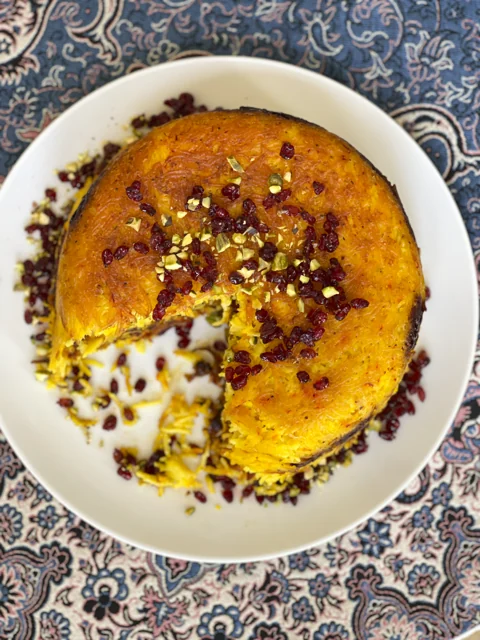
For tahdig, coat the bottom of your rice pot with oil and layer the tahdig ingredients in a single layer on the bottom of the pot. See (Tahdig) for additional tahdig instructions.
Use a wide spatula to mound your rice in the pot. Do not smash the rice down; drop spatulas full of rice in layers into the rice pot to create a mound shape. Once you have layered all of the parboiled rice into the mound, take the round handle of a wooden spoon and poke four or five holes into the rice mound. This allows the steam to travel efficiently throughout the rice pot while cooking.
Sprinkle the rice mound with a couple of pinches of salt. Cover the rice pot with a tight-fitting lid and cook on medium-high heat for 15 minutes. The rice should begin to steam.
Mix water with melted vegan butter.
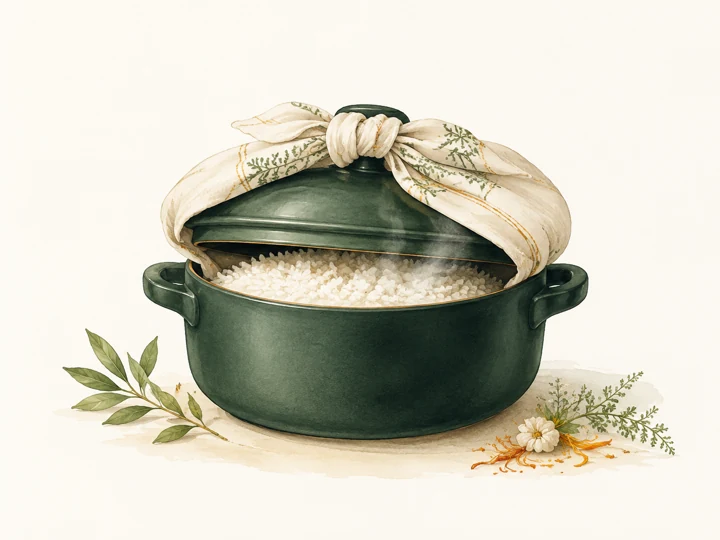
Remove the lid from the rice pot and immediately drizzle the water/butter mixture over the rice. Place a tea towel (damkesh) under the pot's lid and cover the pot (The Damkesh Tea Towel Process). Reduce the heat to the lowest setting and allow the rice to steam for 1 to 1 ½ hours, leaving the damkesh in place the entire time. Remove from the heat.
KEEP EXPLORING