
FOUNDATIONS
Our vegan Persian pantry
Keep your screen awake while you cook or follow a guide.
Affiliate links · As an Amazon Associate, The Vegan Persian Kitchen earns from qualifying purchases.
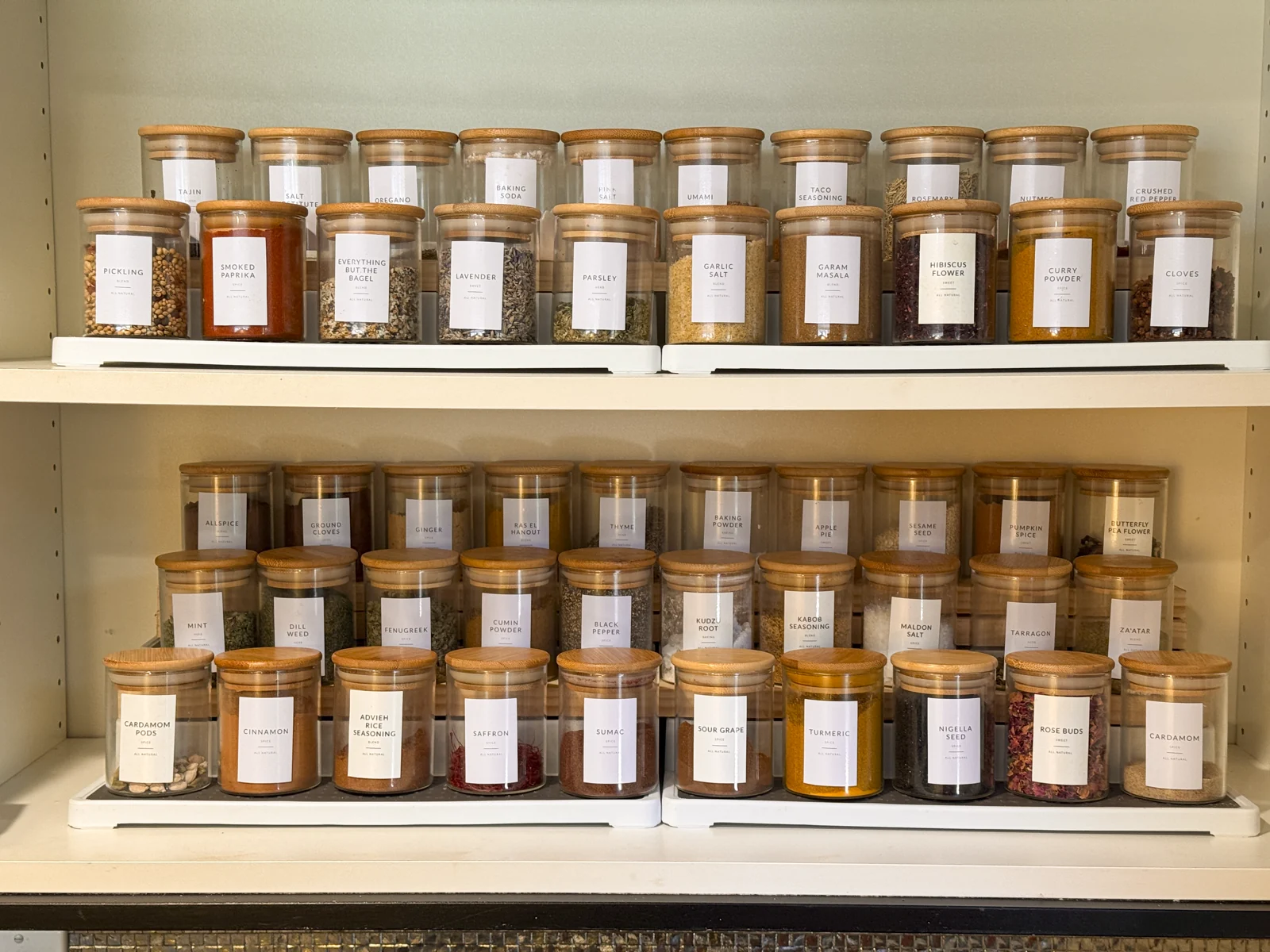
However, there are specific items you will need in your pantry. Some of these ingredients may be familiar, and some will be completely unfamiliar if you are new to Persian cuisine. If you have a decent Middle Eastern market nearby, you should be able to find everything you need there. If not, everything listed here is available online. We have a dedicated Persian section in our pantry with these staples always kept in stock.
A word on substitutions: Unless they are listed in the recipe, we do not recommend making substitutions.
Spices
Persian cuisine uses a wide variety of both familiar and exotic spices. Some of our favorites include saffron, turmeric, and cardamom. Common spices used in Persian cuisine can vary depending on different regions in Iran ,however these are the spices we most commonly use.
AdviehOur Amazon pick
An aromatic Persian spice blend used in rice, stews, torshi, and more.
CardamomOur Amazon pick
An intense and slightly sweet spice found in Persian pastries and desserts.
CinnamonOur Amazon pick
A common spice used in both sweet and savory dishes. We love cinnamon because it provides a natural sweetness that doesn’t overpower the dish, or our senses.
DillOur Amazon pick
Dill is used in many Persian dishes like Baghali Polo (Persian dill rice), kukus (vegan egg dishes), and many more. Substitute with fresh dill if available.
Fenugreek Leaves (or Shanbalileh)Our Amazon pick
Fenugreek is a bitter spice commonly used in Ghormeh Sabzi, Iran’s national dish.
MintOur Amazon pick
Mint is a versatile herb found in many Persian dishes, including stews, salads, drinks, and more. Fresh mint can be substituted for dried, but dried mint is a must-have pantry staple.
Saffron ThreadsOur Amazon pick
Saffron is the red stigma of the crocus sativus flower. It is one of the most expensive spices in the world due to its lengthy and laborious hand-harvesting process. There is no substitute. The name saffron derives from an Arabic word meaning “to become yellow,” which refers to saffron's use as a bright yellow dye.
Persian saffron is a versatile ingredient that can add a touch of luxury and sophistication to any dish, and it is a key ingredient in many traditional Persian recipes. We recommend using Persian saffron threads. Instead of just adding the threads directly to the dish, we make saffron water to really maximize its flavor. See Saffron Water for our saffron water recipe. You can also use a high-quality saffron powder, but be aware that some saffron powders are likely diluted with added ingredients and may not be pure saffron. This is also possible if you buy saffron water.
Don’t let the high price scare you, a little goes a long way! Persian saffron is the secret ingredient in countless Persian dishes and desserts.
SumacOur Amazon pick
Offers a tart, sharp, tangy, and fruity taste profile that pairs well with rice and kabobs.
TurmericOur Amazon pick
A frequently used spice with a warm and comforting taste. It is a potent antioxidant, has anti-inflammatory qualities, and is known for its many health benefits. Among other benefits, it may improve heart health and may mitigate the risk of Alzheimer’s and cancer.
Essential Ingredients
Grains
Pearl BarleyOur Amazon pick
Pearl barley is a type of barley that has been processed to remove its outer hull and polished to give it a pearly, translucent appearance. This versatile grain is a popular ingredient in many cuisines around the world, including Persian cuisine.
Pearl barley has a nutty flavor and a chewy texture, making it a great addition to soups, stews, and salads. It is also a good source of fiber, protein, and other essential nutrients, making it a healthy and nutritious option for those looking to add more whole grains to their diet. In soup it creates a thick, creamy, hearty, and satisfying meal.
Reshteh NoodlesOur Amazon pick
Reshteh noodles are a type of flat noodle that is commonly used in Persian cuisine. They are similar to Italian fettuccine noodles, but are wider and flatter. Reshteh noodles are typically used in dishes such as soups, stews, and casseroles. They are a popular ingredient most famously used in the amazingly delicious Ash Reshte soup, which is a hearty soup made with beans, vegetables, and reshteh noodles. Reshteh noodles have a slightly chewy texture and a neutral flavor, which makes them a versatile ingredient in a variety of dishes.
RiceOur Amazon pick
One of the single most important ingredients in Persian cuisine is high-quality basmati rice. Basmati rice is an aromatic variety of white rice that produces a long and slender grain. High-quality basmati rice turns pure white when cooked, exudes a distinctive aroma, and carries a delicate taste. We prefer extra-long basmati rice because the grains of rice stay separate and fluffy after cooking (as opposed to sticky and clumpy).
How to store rice
We keep our rice in a large glass container with an airtight lid. Pour a thin layer of salt on top of the rice to keep it fresh longer and to discourage any pests from moving in.
Exotic Flavors
DatesOur Amazon pick
Intensely rich with a sweet taste similar to caramel, dates are highly nutritious and loaded with fiber, to boot. They are traditionally served with hot Persian tea, and are also a beautiful addition to Adas Polo (Date & Lentil Rice)
Dried Barberries (Zereshk)Our Amazon pick
Zereshk barberries are a type of dried fruit that is commonly used in Persian cuisine. They are small, tart, and bright red in color, and they have a slightly sweet and sour taste. These dainty red berries are in a league of their own. They contain a berberine compound that may improve cholesterol levels. Briefly saute them for a few minutes in vegan butter with cinnamon, vegan sugar, and saffron until the barberries expand and double in size. You will be hard-pressed not to eat a spoonful of this by itself. It is that good!
Dried Persian Limes (Limu Amani)Our Amazon pick
These are used in several Persian stews. Their aroma is intoxicating and quite unexpected. Trust us when we tell you that you need these in your life! You can buy them or you can easily make your own; see Kitchen Staples (Dried Limes). Limu Amani are a must-have for Ghormeh Sabzi (Kidney Bean & Herb Stew) and other Persian stews.
Dried Rose PetalsOur Amazon pick
Rose Petals deliver a relaxing and lovely aroma and contribute a pop of beautiful color to some of our favorite dishes. Sprinkle dried rose petals over Baklava (Persian Almond Baklava), and other desserts that would benefit from a splash of color.
After a long and productive day in the kitchen, it’s a nice treat to pour some rose water in the bathtub and toss in a handful of dried rose petals. Close your eyes and inhale the perfumed steam deeply while sipping on a rose water-steeped cold drink. Come on, you know you want to, and you absolutely should. You deserve it!
Beans and Legumes
Brown Lentils & Fancy LentilsOur Amazon pick
Brown lentils are an excellent source of protein and are rich in folate and iron. Lentils are low in calories and high in fiber and pack a nutritious punch while being filling and satisfying at the same time. What's not to love? Lentils are used in Ash Reshte (Beans and Greens Soup), Adas Polo (Date & Lentil Rice) and other dishes common to Persian cuisine.
Fancy LentilsOur Amazon pick
Fancy lentils are the same as brown lentils except they are a petite, smaller size. They can be found in Middle Eastern markets. Fancy lentils are wonderful in Adas Polo (Basmati Rice with Dates and Lentils). They are also wonderful served chilled in salads. If you cannot find fancy lentils you can substitute brown lentils, but we prefer using the Sadaf brand fancy lentils for rice dishes because, hey, we are fancy too just like the lentils!
Canned Chickpea Water (Aquafaba)Our Amazon pick
Whoever thought of whipping the liquid from a can of cooked chickpeas and adding it to foods as a binder was a genius. Reserve the precious liquid to make aquafaba (see Basics, Prepare aquafaba).
Dried ChickpeasOur Amazon pick
Chickpeas are commonly known as garbanzo beans. They are a key ingredient in Ash Reshte (Beans and Greens Soup) and Ab Goosht (Traditional Persian Stew). They must be soaked overnight prior to cooking. They are a wonderfully healthy low-calorie and low-fat superfood. We love tossing some in our salads for some extra protein.
Dried Kidney BeansOur Amazon pick
A classic, mildly flavored legume in the pea and lentil family, kidney beans are commonly used in Ash Reshte (Beans and Greens Soup) and Ghormeh Sabzi (Kidney Bean & Herb Stew). They must be soaked overnight prior to cooking.
Dried White BeansOur Amazon pick
Commonly known as cannellini beans or white kidney beans, these are a great addition to Ash Reshte (Beans and Greens Soup). They have a pleasant nutty flavor and a creamy texture. Like most dried beans, they need to be soaked overnight before cooking.
Dried Yellow Mung Beans (Moong/Mung Dal)Our Amazon pick
Mung dal is made from whole mung beans that have been hulled and split, resulting in a delicate lentil. They cook quickly and are easy to digest. Mung Dal is high in dietary fiber and an excellent source of protein. We use it to make vegan “eggs” for Persian egg dishes such as kukus (Herb Frittata), Persian frittatas (Cauliflower Frittata), and Tahchin (Crispy Rice with Mushrooms, Spinach, & Caramelized Onions). Alternatively you can purchase a vegan egg substitute.
Raw WalnutsOur Amazon pick
Store these (and most nuts) in the freezer to preserve their freshness. We also like to keep a cup of raw walnuts in a jar of water in our refrigerator to snack on or to use in our Sabzi Khordan (Fresh Herb Appetizer). Soaking the walnuts removes bitterness and lends a nice crisp crunch.
Yellow Split PeasCompare yellow split peas options
There are two types of yellow split peas in Persian cooking: zood paz (for quick cooking) and dear paz (for slow cooking).
We prefer using slow-cooked yellow split peas because they hold their shape, retain their vibrant color, and don’t quickly become overcooked like the quick cooking yellow split peas. They are most commonly used in Persian stews and dolmas. Most of the yellow split peas found in your local grocery store are the quick cooking ones. Check your local middle eastern market or online for the slow cooking type. If using the quick-cooking type, be sƒure to keep your eye on them while cooking so they don’t become overcooked.
Liquids
Orange Blossom WaterOur Amazon pick
Orange blossom water can be used similarly to rose water, and has a unique, unforgettable flavor and a refreshingly aromatic scent. We always keep a bottle on hand to use in jams, desserts, and drinks.
Pomegranate MolassesOur Amazon pick
This ingredient is made by boiling pomegranate juice until it thickens into thick, deep, rich molasses. Pomegranates are part of the Punicaceae family, an order of flowering plants that include eucalyptus and guava plants. Sometimes also called pomegranate paste, it is readily available in many markets as well as online. We use it liberally in Fessenjune (Walnut Pomegranate Stew), desserts, and more. Let your creativity flow, we find pomegranate molasses to be a delicious addition to so many dishes.
Rose WaterOur Amazon pick
Besides being a staple in Persian desserts and preserves, rose water is also a secret beauty treatment used in Iran as a toner and cool skin mister on a hot summer day.
Rose water contains flavonoids, vitamins A, B, C, and E, and antioxidants. Its exotic, intoxicating taste and aroma add a floral essence to desserts that makes them alluring and oh, so very tempting. We also use a tablespoon to add flavor to our water and our smoothies for extra loveliness.
Vegetable BrothOur Amazon pick
We prefer to make our own and always have some on hand in the freezer. It’s easy to make and a much healthier option! (Vegetable Broth)
Secret Agents
Agar AgarOur Amazon pick
Made from 100 percent natural red seaweed, this is a plant-based gelling, thickening, stabilizing, and emulsifying agent. It is used to thicken soups, sauces, and preserves, and is also sometimes used as a digestive remedy for upset stomachs.
Lactic AcidOur Amazon pick
Lactic acid is a natural preservative found in foods like yogurt, baked goods, pickled vegetables and sour cream (Vegan Sour Cream). It's responsible for their tangy flavor. Along with making your food last longer, it may boost your health by strengthening your immune system.
KEEP EXPLORING
Continue building your foundation.
 KITCHEN GUIDEThe tools that shape tasteMeet the few trusted tools that make preparation calmer and more precise.Explore
 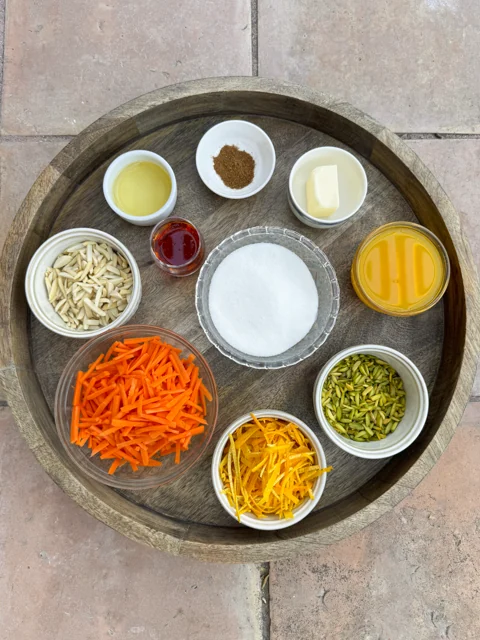 KITCHEN GUIDEThe Persian mise en placeGather, measure, and organize so the cooking itself can flow.Explore
 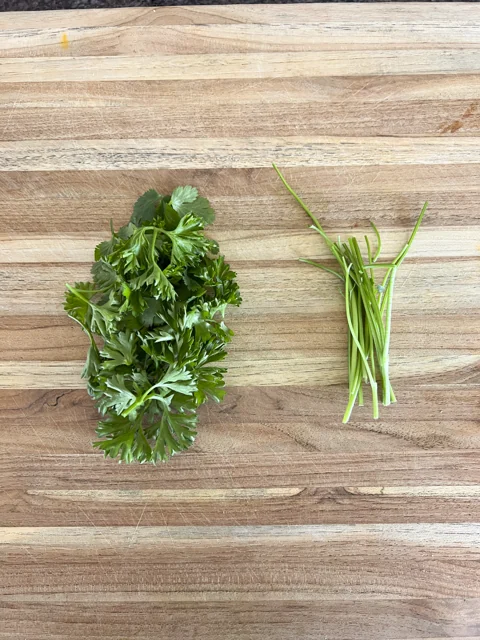 KITCHEN GUIDECleaning your greensWash, sort, and prepare fresh herbs with care and less waste.Explore